Zootennis

Support Junior Tennis Champions Center

Friday, July 13, 2012

USTA Clay Court Wild Card List; Other Wild Card News; Midwest Section Wins USTA Intersectionals

I'm heading to Memphis for live coverage of the Girls 18s Clay Courts beginning Monday. This will be my fifth year covering the event, but the first time I've done it and Wimbledon in the same year. I haven't had enough time at home--I've found 10 days is the Goldilocks gap between tournaments--yet after seeing the field for the Girls 18s clays, I can't help but be excited about the tournament.

I can't ever remember covering a junior event where all four semifinalists are back the following year, but Gabby Andrews, Denise Starr, Danielle Collins and Stephanie Vlad are all entered again this year. Add to that quartet competitors like Jamie Loeb, who won the Grass Courts and a 10K in Buffalo, Spring National champion & Easter Bowl finalist Brooke Austin, Ashley Dai, Katerina Stewart, Caroline Doyle and hometown favorite Catherine Harrison and you have the makings of an outstanding tournament. I don't know if the US Open Junior wild card is responsible for the strength of the field, but it certainly hasn't hurt. Louisa Chirico, who won the $10,000 Pro Circuit event in Sumter, isn't seeded, nor are Brooke Broda, the 16s Easter Bowl champion, and Jessica Ho, the 16s ISC champion, so there could be some excellent matches from the start.  The complete list of competitors can be found at the TennisLink site.

Here is the list of all the wild cards for the USTA Clay Court Championships around the country:

Boys 12s
Courage Crawford
Karl Poling
 
Girls 12s
Jasmine Abidi, Jasmine
Aleksandra Bekirova
Angelica Blake
Isabella Boulais
Emma DeCoste
Tiffany Pyritz
Julia Vulpio
Hailey Wilcox

Boys 14s
Christopher Jiahui Kralik
Sangeet Sridhar
Ivan Thamma

Girls 14s
Nicole Conard,
Sabina Grigorian
Ashley Kratzer
Angela Kulikov
Cheyenne Lilienthal
Nnena Nadozie
Rachel Papavasilopoulos
Maya Smith

Boys 16s
Zandrix Acob
Spencer Furman
Daniel Gealer
Tommy Paul

Girls 16s
Jeannez Daniel
Mary Haffey
Mia Horvit

Boys 18s
William Albanese
Justin Butsch
Terrell Celestine
Carlos Di Laura
Jose Gracia
Daniel Kerznerman
Nolan Paige
Martin Redlicki
Stephen Watson

Girls 18s
Emerald Able
Rima Asatrian
Amanda Atanasson
Makenzie Craft
Allison Miller
Monica Mitta

Other wild card news announced recently has NCAA champion Nicole Gibbs, who won a round at the WTA Bank of the West Classic at Stanford before losing to Serena Williams 6-2, 6-1, receiving a wild card into the WTA Mercury Insurance Open in La Costa, Calif. Zoe Scandalis of USC received a qualifying wild card according to this article from the North County Times. And for an account of Mallory Burdette's 7-5, 6-0 second round loss to No. 2 seed Marion Bartoli at Stanford last night, see this article from the San Jose Mercury News.

Brian Baker and Jack Sock have received wild cards into the ATP BB&T Atlanta Open next week, with Nathan Pasha of Georgia and Kevin King of Georgia Tech receiving qualifying wild cards.

And the $100,000 Odlum Brown Vanopen Challenger in Vancouver has granted a main draw wild card to Wimbledon boys champion Filip Peliwo, who is from that city, although currently training in Montreal. Peliwo lost in the first round of this week's $15,000 Futures in Canada, to a qualifier, which, even accounting for the long trip back from London, was something of a surprise.

At the Intersectionals in Shreveport, Louisiana, the Midwest section beat the Southern section 6-2 to claim its second title in three years. The Midwest got singles wins from Paul Oosterbaan, Thomas Fawcett, Brooke Broda, Alexandria Chatt and Keisha Clousing and a doubles win from Chatt and Alexandria Najarian.

The Shreveport Times published this article on the final of the mixed team event for the 16s division. For all results, see the TennisLink site.

Thursday, July 12, 2012

Wimbledon Junior Recap; My Thoughts and Observations from Ten Days at Wimbledon


My recap of the Wimbledon Junior Championships can be found today at Tennis Recruiting Network. If you are looking for a synopsis on the tournament rather than the details provided in my daily coverage last week, it should fit the bill.

Due to restrictions imposed on those with media credentials taking action photographs, I am unable provide a slide show or videos of this tournament. I was fortunate to be able to purchase photos from credentialed photographer Susan Mullane, who shoots all the junior slams for the ITF, so the daily posts were enhanced by her considerable expertise. For more of her work, see the ITF photo gallery at the junior website.

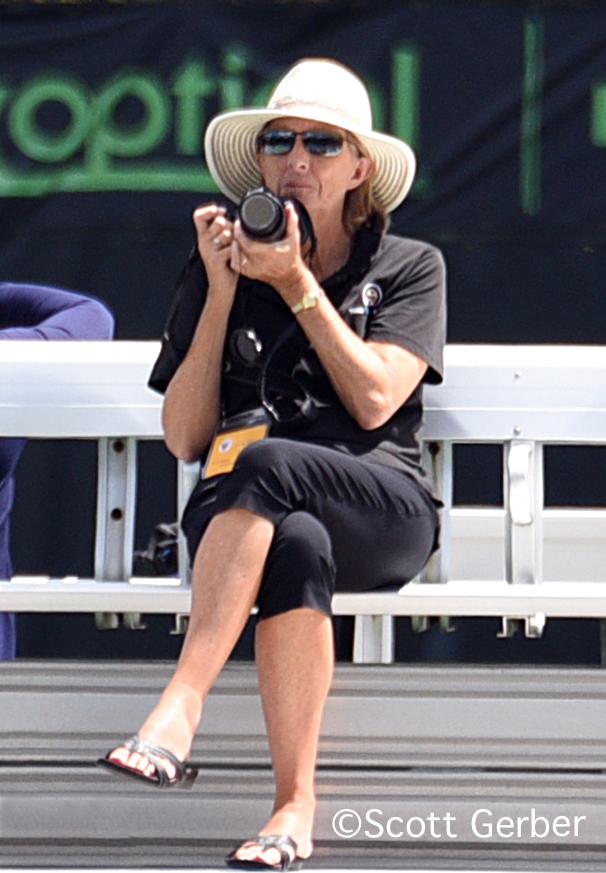
Although action photo were off limits, I did get some shots around the grounds to illustrate some of my notes and observations, which appear below, in no particular order.


∫ The English love their tennis. Every pub had it on their TVs, every newspaper was full of coverage, it saturated the BBC. I don't qualify as a disinterested observer, but tennis seems to be on a different sporting plane there than it does anywhere else I go. It's impossible to imagine what pressure Andy Murray must feel in that atmosphere; his identification with LeBron James may be a clue, but James is playing a team game, and left Cleveland, so the pressure scale remains heavier on the Scot's side.


∫ The singles finals of the Junior Championships are treated with great respect, put on Court 1 and even given an hour's window of exclusivity before the men's and women's singles finals begin. This, as well as the above, leads to impressive crowds, with the nearly 12,000 seats between half and two-thirds full for both the finals. Apart from being ideal for those covering the events, this staging truly does provide an experience similar to that of the pros for the juniors lucky (or good) enough to reach the final.

∫ All credit to Filip Peliwo, for breaking through in his third junior slam final, and to Luke Saville, for putting the pressure on himself as defending champion, but I was also impressed by Mitchell Krueger's performance all week. He came through an exceedingly tough first round match, won tiebreaker after tiebreaker to advance to the semifinals, and five times came within one point of reaching his first junior slam singles final against Peliwo. A more crushing defeat is difficult to imagine, but he handled the aftermath with insight and maturity. He also played the best tennis I've ever seen from him, and for me, that's a seven-year span.

∫ Playing deuce-ad for the doubles, even with the weather-related backlog, added some legitimacy to the first three rounds, which were decided in match tiebreakers in lieu of a third set. I'm not a big fan of advantage sets, preferring the tiebreaker, but it's much preferable to the no-ad receiver's choice and match tiebreaker used at the other three junior slams.  I sure wish there was some consistency, not in all four grand slams, which is too much to ask I guess, but just within slams. The mixed and junior doubles play a different format than the men's and women's doubles at the US Open, for example.


∫ The ballrunners are great at all the grand slams. But Wimbledon's are the best of the best, especially considering they are responsible for the covering and uncovering of the outside courts when it rains.


∫ I learned I was one of only ten internet-only journalists credentialed in the first year of the club's pilot program. Although my desk was in the farthest reaches of the fourth floor, along with the non-rights holder radio announcers, I had a desk specifically set aside for my use, which I did not have five years ago. I was treated as well as all the other journalists, which is very well, and hope I will be offered credentials for next year.


∫ I come from Michigan, where for eight months of the year, the weather is less than ideal. But, even accounting for some bouts of heat, humidity and thunderstorms, we do have great summer weather, and those three or four months can make up for a lot of ugliness the rest of the year.


How the English rationalize their summer weather I can't fathom, but I've been there twice now, for ten days at a time, and I can count the days that would pass as summery here on one hand. Down jackets, scarves, and every conceivable type of umbrella was evident for many of the July days during this tournament. I believe there was some rain--and during a few evenings, considerably more than some, as records were set in June and were expected for July--every one of the ten days I was there.  Somehow the tournament was completed on time, without resorting to indoor play, but that bordered on a miracle.

∫ It's ironic that the ITF no longer allows non-hotel hospitality at its Grade A, 1, 2, & 3 tournaments, but Wimbledon continues to house players in a college dormitory at Roehampton. And segregating the juniors from the professional players for their dining is disappointing for those who've been at the US Open, where they are afforded the same food and privileges as the pros.


∫ For some reason the electronic scoreboards showed neither the player's seeding or their country. I would have eaten a lot more strawberries and cream if I had had a pound for every time I was asked what country a player was from (when I answered for Krueger and Kwiatkowski, I could always count on a surprised "US?, oh really.")


∫ Not to overreact based on one tournament, and Kyle Edmund did get a terrible draw in Mitchell Krueger in the first round, but it was disappointing to have no British boy or girl in the quarterfinals of singles, and only one, Evan Hoyt, get past the quarterfinals in doubles.


∫ I have long since passed the point when I expect to see any other tennis journalists at junior matches, and most have so many other responsibilities these days, with podcasts, radio, TV in addition to web and print deadlines, they can hardly be faulted for focusing on the players most fans care about. But I was able to have a few conversations (name dropping alert!) with Sports Illustrated's Scott Price (about Allie Kiick), the Montreal Gazette's Stephanie Myles (about all the young Canadians), the Toronto Globe and Mail's Tom Tebbutt (ditto), Fox Sports' Greg Couch (about Brian Baker's junior career) Australian Associated Press's Darren Walton (about Luke Saville and Ashleigh Barty),  the New York Times' John Martin (about the young Americans), Tennis Channel's Joel Drucker (who is always amused with my optimism regarding US tennis) and Sandy Harwitt, who wrote the ITF junior articles (about the many juniors she's interviewed that I hadn't).  Now that I write all these down, perhaps I've underestimated the interest in younger players, which may be just more specific, rather than the whole milieu of junior and college tennis that I've embraced.

Guy McCrea, who was working for BBC and writing a daily diary for the WTA blog On the Baseline, sought me out frequently, despite his busy schedule, to talk about the juniors, particularly the girls. He cornered me for a discussion about future WTA stars in the juniors, and although I warned him my track record on this isn't very good, he wrote up my responses anyway.


∫ I spent quite a bit of time at Court 18, where the longest tennis match was played in 2010, and it's impossible to watch a match at that court without thinking about it. This year, Sam Querrey and Marin Cilic played the second longest match at Wimbledon, which took 5 and 1/2 hours to play and ended in Cilic's 7-6 (6), 6-4, 6-7 (2), 6-7 (3), 17-15 win. And hardly anyone noticed, thanks to John Isner and Nicolas Mahut. That remains the most amazing result I've ever encountered in my lifetime of watching sports.

Wednesday, July 11, 2012

The Case of the Missing Qualifying Wild Card


You've probably noticed during the four slams that I'm glued to my computer watching the live scoring for the qualifying, and I post a recap of the day's results regularly those four weeks every year.  I'm not sure when or where I became a big qualifying fan, but it's probably due to the number of players in these draws that I know or have seen play in the eight or nine years I've been following college and junior tennis closely.

The traditional qualifying wild card that goes to junior champions didn't get used this year at the French or at Wimbledon by the 2011 boys champions. I heard that Roland Garros boys champion Bjorn Fratangelo was not interested in a wild card into the French qualifying, but Luke Saville was eager to use his into Wimbledon. He was on the wild card list released by the All England Club, but his name didn't appear in the draw, and when I got to Wimbledon, I was determined to find out why. After an interview with Saville during the Wimbledon Junior Championships, I got my answer, and during one of the many rain delays I wrote this piece to explain it. It's a cautionary tale for anyone who thinks they might be in the running for a wild card for any level of event.

As the 2011 Wimbledon boys champion, Australian Luke Saville should have been playing in the men’s qualifying this year at Wimbledon. The All England Club has traditionally provided that precious opportunity to both the boys and girls champions from the previous year, but a lack of communication and the strict adherence of the rules of competition for ITF Futures kept him out of the tournament.

“I was entered in another tournament that week because I wasn’t 100 percent sure I was going to get the wild card,” Saville said. “When I was awarded the wild card I tried to withdraw from the tournament, but the withdrawal deadline had already been put in place.”

Expecting only to pay the ITF’s late withdrawal fee, Saville assumed there would be no other problem given the disparity in the levels of the two tournaments.

“My error was in not following it up with the ITF. A $10,000 tournament in Germany, Wimbledon qualifying, I thought maybe I’d cop a $300 fine, whatever. I didn’t think they’d be so harsh on it, but they were, and I’ve learnt the hard way.”

The ITF rule that a player cannot be committed to play in two tournaments in the same week has exceptions, but none that applied in Saville's case.

Although he had not been particularly successful in Futures play in May, Saville was pleased with his level and was looking forward to competing on grass again.

“I’d been playing on clay for maybe five weeks and at the French Open,” said Saville, who lost in the quarterfinals of the junior championships in Paris. “I was loving the grass courts, hitting with a mate, Ben Mitchell, who was also playing in the qualifying event. We were playing great, playing some really high quality sets, so I was itching to get out there, to be honest, and it came crashing down pretty quickly."

Saville, 18 and the 2012 Australian Open boys champion, didn’t hear from the All England Club about this presumed wild card during the months leading up to the event, but he blames himself for not initiating a discussion about it earlier.

“I probably should have emailed, because I didn’t hear from Wimbledon for about eleven and a half months after I won it,” Mitchell said, contrasting this to his communication with Australian Open tournament director Craig Tiley, who emailed his congratulations and an offer of the wild card into the 2013 men’s qualifying in Melbourne within a week of Saville’s boys title there in January.

“So that’s clear in my head. But from Wimbledon, the whole time, you hear rumors it’s automatic, you hear rumors no, it’s not, so I’m just in the dark. If I don’t get one and I’m not entered in a tournament, I’m sitting around in Europe. I come a long way, and if I’m playing no tournament for two weeks--I don’t want to be stuck like that. So yeah, I learned the hard way.”

Tuesday, July 10, 2012

Gibbs Wins First WTA Level Match, Will Play Serena Williams in Stanford Second Round; July National Open Winners; Tim Russell's Response to Sean Hannity


NCAA champion Nicole Gibbs received a wild card into the Bank of the West Classic, the annual WTA Premier event played on the campus of Stanford University.  Gibbs, who just cliamed the title at the $50,000 Pro Circuit event in Denver on Sunday, won her first round match today over qualifier Noppawan Lertcheewakarn of Thailand 6-4, 6-4 and will face Wimbledon champion Serena Williams in the second round Wednesday.  Gibbs' teammate Mallory Burdette, the NCAA finalist this year, also received a wild card and is scheduled to play her first round match against Great Britain's Anne Keothavong this evening.

Gibbs, 19, was down a break in the opening set to Lertcheewakarn, ranked 174 at 3-4, but she won the last three games of the set. In the second, Lertcheewakarn was again up a break, at 3-2, but was immediately broken back at love. At 4-5, the 2009 Wimbledon girls champion had serving problems, with two costly double faults, including on match point, handing Gibbs her first WTA main draw win.

Next up for Gibbs is none other than five-time Wimbledon champion Serena Williams, who had a first round bye.

Gibbs, who was six years old when Williams won her first slam, spoke about facing the top seed in this San Jose Mercury News article.  And the Stanford women's tennis website, has put together this amusing Tale of the Tape comparing their lives and careers.

The July National Opens are complete and here is the rundown of the finals results:

B12s:
Axel Nefve (1) def. Andre Xiao (2) 6-2, 6-1
Brian Shi (4) def. Ryan Fu (3)    6-1, 6-0
Keenan Mayo (1) def. Jenson Brooksby (2) 6-2, 6-1
Andrew Fenty (1) def. Jaycer Calleros (5) 6-3, 6-2


G12s:
Josie Frazier (1) def. Alexa Butera (2)  6-3, 6-2
Clarissa Hand (2) def. Rachel Lim (1) 2-6, 6-3, 10-3
Carson Branstine (2) def. Taylor Johnson (3) 1-6, 6-4, 10-4
Jasmin Tripathy (1) def. Samantha Gillas (5) 6-3, 6-0

B14s:
Gabriel Pilones (1) def. Mwendwa Mbithi (3) 6-0, 6-1
Connor Hance (1) def. Jacob Brumm 6-1, 2-6, 6-2
Patrick Kypson (5) def. Zeke Clark (1) 6-4, 7-5
Connor Johnston def. John McNally  6-3, 7-6(5)

G14s:
Jaeda Daniel (4) def. Nicole Conard 6-4, 6-2
Jessica Livianu (3) def. Jada Hart (1) 6-3, 7-5
Priya Niezgoda (2) def. Morgan Coppoc (4) 6-2, 6-1
Isabella Lorenzini (2) def. Madison Battaglia (3) 6-2, 6-0

B16s:
Nicolas Podesta (3) def. Kyle Seelig (2) 6-1, 6-1
Kial Kaiser (2) def. Nikolas Ramadan (5) 6-2, 6-4
Ziqi Wang (5) def. Walker Duncan (4) 7-5, 6-3
Chase Colton def. Maximilian Fliegner (1) 1-6, 6-4, 6-0

G16s:
Meghan Kelley (1) def. Evan Siskova 6-2, 6-4
Alexis Pereira (3) def. Kenadi Hance (4) 6-0, 6-1
Katerina Stewart (1) def. Chloe Ouellet-Pizer (2) 6-2, 6-1
Caroline Dolehide (8) def. Michaela Gordon (7) 6-2, 6-3

B18s:
Jeremy Lynn def. Jordan Daigle (1) 6-3, 7-6(3)
Quentin Monaghan (5) def. Matthew Nardella 6-1, 6-2
Deiton Baughman (3) def. Henry Craig (1) 6-4, 6-3
Roy Lederman (1) def. Thomas Mayronne 6-3, 7-5

G18s:
Kimberley Yee (1) def. Moncia Robinson 6-1, 6-3
Spencer Liang (3) def. Rachel Pierson (2) 6-3, 6-4
Kiah Generette def. Carolyn Xie 6-1, 5-7, 6-2
Brooke Austin (1) def. Jerricka Boone (8) 6-2, 6-0

In response to Sean Hannity's critical post on the upcoming changes to the USTA junior competition calendar and format, USTA Junior Competition Committee chair Tim Russell has posted this detailed reply.

It has been my mantra since the particulars of these USTA changes first surfaced that the new structure is too complicated, and change for change's sake is likely to have unintended consequences. Moving away from four junior majors and 128 draws saddens the traditionalist in me, and I do not feel a consensus was reached at the grass roots level before proceeding with this far-reaching reorganizaton.  I spoke to Professor Russell about my objections in a meeting at the NCAAs in Athens, and received many of the same responses as Mr. Hannity does here. I appreciated the opportunity to discuss the issues, but because the changes had already been voted on and approved, the debate was more academic than practical.

I believe the USTA wants what we all want: what's best for American tennis. I genuinely hope these changes point us in that direction.


Monday, July 9, 2012

Travel Day; Gibbs Wins $50K in Denver, Smith Takes Winnetka Challenger, Bogdanovic Claims Pittsburgh Futures

It's a travel day for me, and I'll be returning from London to Kalamazoo and to a climate where summer clothes are appropriate. With the heat wave over, I hope the adjustment won't be too great, going from what I would consider autumn or early spring weather back to midsummer.

But I wanted to pass along congratulations to Nicole Gibbs and JP Smith, who won the $50,000 tournaments in Denver and Chicago, respectively. Gibbs, the 2012 NCAA champion from Stanford playing in her first tournament since winning the singles and doubles in Athens in May, won three qualifying matches and five main draw matches  to claim the singles title, and also reached the doubles final with Lauren Embree. Gibbs and the NCAA team tournament Most Outstanding Player Embree lost to Marie-Eve Pelletier of Canada and Shelby Rogers of the US 6-3, 3-6, 12-10.


Gibbs is scheduled to play in this week's WTA Bank of West Classic at Stanford as a wild card. She has drawn qualifier Noppawan Lertcheewakarn of Thailand, the 2009 Wimbledon girls champion, in the first round and if she wins that, will play 2012 Wimbledon ladies champion Serena Williams. Grace Min also qualified, and will play No. 6 seed Chanelle Scheepers of South Africa in the first round.

Like Gibbs, Smith also qualified and won the singles title, beating Ricardas Berankis in the final 3-6, 6-3, 7-6(3), and also lost the doubles final in a match tiebreaker. Smith and former Baylor star John Peers fell to Devin Britton and Jeff Dadamo 1-6, 6-2, 10-6 in the doubles final.  For more on former Tennessee Volunteer Smith's win, including his match points saved in the singles final, see this article from utsports.com.

At the Pittsburgh Futures, top seed Alex Bogdanovic of Great Britain didn't drop a set en route to the title, beating unseeded Matheson Klein of Australia 6-2, 6-4 in the final. Jason Tahir, who will be a sophomore at Duke, and Michael Redlicki, who will start in Durham this fall, won the doubles title unseeded and without losing a set. They beat No. 2 seeds Ruben Gonzales of the Phillippines and Joe Kielbowicz of the US 7-6(4), 6-3 in the final.

The men's draws, including the qualifying draws for this week's Futures in Rochester, NY are here.

The women's Pro Circuit draws, including the qualifying draws for this week's $50,000 tournament in Yakima, Washington, are here.

Sunday, July 8, 2012

Canada Doubles Up at Wimbledon, with Peliwo Winning Boys Championship and Girls Champion Bouchard Adding Doubles Crown


Filip Peliwo Joins Bouchard in Grand Slam Winners Circle
©Colette Lewis 2012--
Wimbledon--

Ten days ago, Canada had never had a junior slam singles champion and Filip Peliwo had never won a match on grass.

After Peliwo's 7-5, 6-4 victory over defending champion Luke Saville of Australia on Court 1 Sunday afternoon, Canada claimed its second junior Wimbledon title in the space of two days, with Eugenie Bouchard taking the girls championship Saturday.

Bouchard's 6-2, 6-2 win over Ukraine's Elina Svitolina served as motivation for Peliwo, as did his losses in the previous two junior slam finals this year.

"I was definitely, I won't say jealous of her, but that made me even more hungry," said Peliwo, an 18-year-old from Vancouver, who lost in the first round of the warmup event in Roehampton last week. "I just wanted to have the same feeling for myself and for Canada, to be able to win the slam. I knew it would be a great achievement if both girls and boys champions would be Canadians. That really inspired me.

"The two previous finals I've lost, those are the biggest inspirations as well. I didn't want to lose again, but I wasn't letting it get into my head. I was just thinking about the match, not the past."

Peliwo trailed Saville by a break in the first set of the match, played in front of approximately 6,000 fans who had already experience several rain showers while making their way to the All England Club, whether to watch the boys final or the men's final, whether on Centre Court or Murray Mount. At 2-2, there was a black cloud and some rain, but the boys played through it, with Saville saving two break points, then breaking Peliwo for a 4-2 lead. Saville, the 2012 Australian Open champion, saved two more break points for a 5-2 lead, but Peliwo had been there before.

In his 5-7, 7-6(3), 6-3  semifinal win over Mitchell Krueger on Friday, Peliwo trailed in 5-2 in both the first and second sets, and saved five match points, so he wasn't likely to go away.

"I've heard around the ITF (junior) Tour, even the Pro Tour a little bit, that guys know that I fight no matter how far down I am," said Peliwo, who is 579 in the ATP rankings.  "It's really worked for me in many situations."

Not only did Peliwo get the break back, he broke Saville a second time to take a 6-5 lead, then, with the assist of a perfect offensive lob, held to take the first set.

"If I could have kept my nerve and served half as well as I had the whole tournament, then I probably would have served out the first set,"  said Saville, who only had one ace, in contrast to Peliwo's five. "He broke me twice in a row, and I'd only gotten broken maybe twice in the whole tournament."

Peliwo again trailed in the second set, after being broken at love serving at 1-2, but again he came back, converting his third break point with an aggressive return in the next game to get back on serve. Sensing the importance of pouncing on Saville when he was not at his best, Peliwo continued to aim for the lines and even to finish at the net occasionally.

"The biggest thing was that I wasn't waiting for him to make a mistake as much," said Peliwo, who lost to Saville in the Australian Open boys final in January. "I was going for my shots and trying to dictate points, whereas in the previous two finals I was playing passive and waiting for my opponent to miss and give me the match, which isn't going to happen very often to guys that made finals."

Saville, who has made four junior slam finals, winning two, was unable to raise his level to that of Peliwo in the late stages of the match. Broken at 3-3, Saville only had two more chances to get the break back, and true to his word, Peliwo wouldn't allow it.  At 4-3, 30-30 with Peliwo serving, he hit a forehand winner, then an ace to take a 5-3 lead.

After a Saville hold, Peliwo stepped to the line for the most important service game of his junior career. His service cooperated, with a good first serve giving him a 30-15 lead, and then Saville netted a backhand to give Peliwo two match points.

He only needed one. With an ace up the T, Peliwo had the championship that had eluded him in his two previous appearances, and he fell to his knees in celebration, continuing to smile widely and clench his fists as he sat on the bench awaiting the award presentation.

"That's exactly how I wanted to finish it," Peliwo said of his ace. "Right now it's still sinking in, so I can't believe exactly what happened right now. But it feels great. Feels great to finish that way."

With his win, Peliwo will replace Saville at the top of the junior rankings, and is planning on playing the US Open juniors in September. Saville however, is moving out of the juniors, although with few regrets following his final loss.

"He played well today," said Saville, who, like Peliwo, shared his Wimbledon title in 2011 with a countrywoman, Ashleigh Barty. "He was by far the better player out there, and he definitely deserved to win today."

Bouchard Teams with Townsend for her Second 2012 Wimbledon Title

Bouchard and Taylor Townsend of the US took the girls doubles championship, with the top seeds defeating No. 7 seeds Belinda Bencic of Switzerland and Ana Konjuh of Croatia 6-4, 6-3 in the girls final, played on Court 18.  Unlike the boys singles final, the girls doubles final was halted in the second set by rain with Bouchard and Townsend up a break at 4-2. The net was taken down but the court left uncovered and play was resumed without another warm-up required.

Bouchard and Townsend, playing together for only the third time, held on to that break to win the first set, but trailed 3-0 in the second before Bouchard held for 3-1.  That's when the No. 1 seeds stopped thinking about attending the champions ball on Sunday night, and began to bring their thoughts back to the task at hand.

"We stopped talking about wardrobe and what not," said Bouchard. "This can't go three sets, we need time to get ready."

"We actually started talking about tennis," Townsend added. "That was our motivation. Genie said to start focusing on holding our serve."

"Every break game we had chances," said Bouchard. "Either up 30-0 or it was an ad game," said Townsend. "We both started being more aggressive, got our energy back up. We were getting pissed off, so we got ourselves back happy and bouncy again, and we started playing better."

With Bouchard returning well and Townsend hitting several of her deft touch volleys, they pulled even, then broke Bencic on their second break point attempt to take a 4-3 lead. Bouchard held and it looked as if Townsend would need to serve it out when Konjuh had a 40-0 lead serving, but Bouchard and Townsend won the next four points to earn a match point.

Townsend netted a forehand volley, but immediately redeemed herself with a backhand drop shot winner for another match point, which Bouchard and Townsend converted when Konjuh's forehand went wide.

The celebration was subdued, perhaps because it was the second junior slam doubles title for each. Bouchard, who won the Wimbledon title last year with Grace Min, and Townsend, who won the Australian title this year with Gabby Andrews, as well as the singles, now have six junior slam titles between them.

"It was a final, and you're always pumped for finals, so we were really happy with the win. Even if it didn't show, we were happy," Bouchard said.

French Open Boys Champions Harris and Kyrgios Win Wimbledon

Unlike Bouchard and Townsend, who played together for the first time at the French, the boys champions, Andrew Harris and Nick Kyrgios of Australia, have played together for several years.

The No. 4 seeds, who won the French title last month, added to their junior slam title collection with a 6-2, 6-4 victory over the unseeded Italian pair of Matteo Donati and Pietro Licciardi.

Delayed by one of the countless rain showers that have plagued London for ten days, the boys doubles final was also interrupted by a heavy cloudburst with Harris and Kyrgios leading 6-2 and 4-3 and serving.  It wasn't the ideal time for a delay for the Australians, but they managed to keep their focus and momentum.

"It was obviously tough, because we could almost smell the victory," said Harris, 18. "We knew we had to come with a lot of energy with the rain delay and not be flat because of it, and that's what we did."

The Italians held for 5-4 to force Harris to serve it out, but he had no difficulty doing so, with big first serves putting his opponents on the defensive, and at 40-15, he ended it with another good first serve.

After reaching the semifinals in Australia this year and surviving some scares in their run to the French Open boys doubles title this year, Harris and Kyrgios felt they really hit their stride at Wimbledon.

"We were down three match points in the quarterfinals at the French," Harris said. "But we stayed confident and composed. We've had our fair share of wins in close matches and super tiebreaks, so that's been good."

Wimbledon is the only junior doubles championship that doesn't employ the no-ad, match tiebreaker format now used on the ATP and WTA tours, but Kyrgios believes the Wimbledon decision produces a more reliable result.

"I think here, playing full scoring, it was good for us," said Kyrgios. "It took away the luck--the best players win, I guess. We didn't drop a set this whole time, and I think playing ad-deuce is great."

For complete draws, see the Wimbledon website.