Zootennis


Schedule a training visit to the prestigious Junior Tennis Champions Center in College Park, MD by clicking on the banner above

Sunday, September 10, 2006

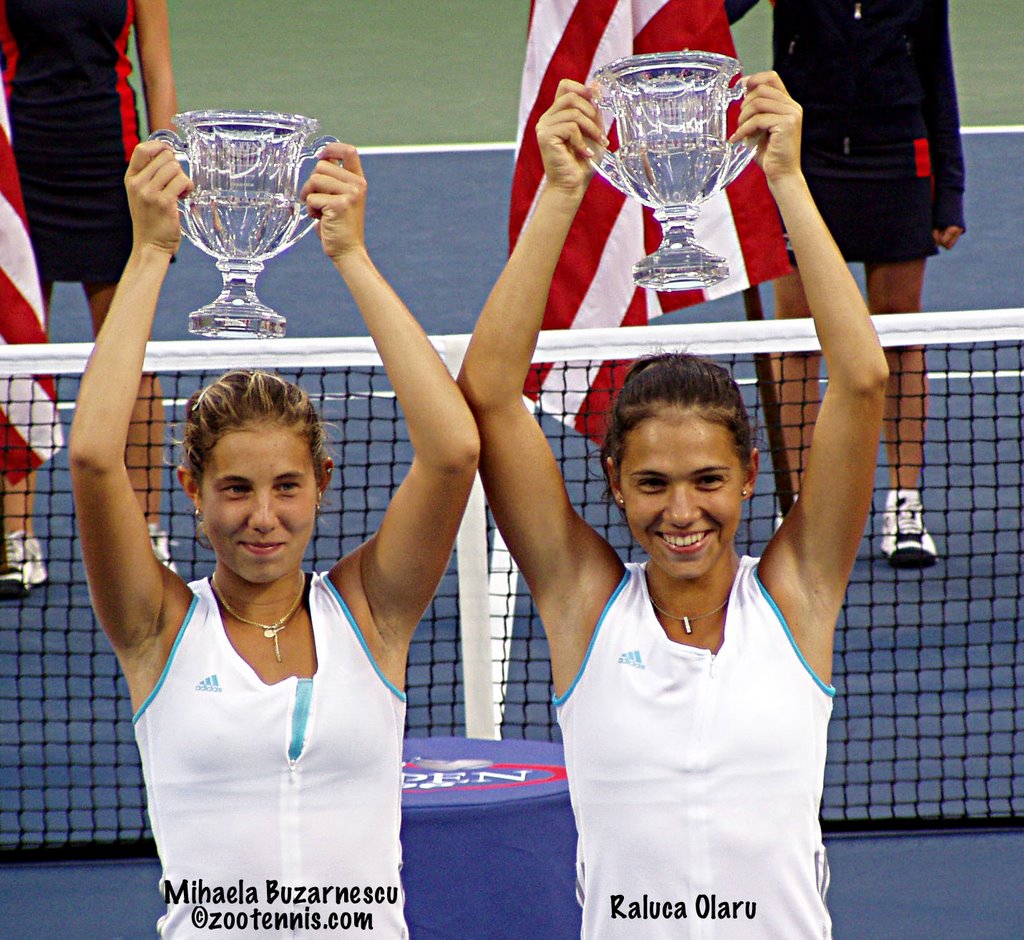
Buzarnescu and Olaru Deny Pavlyuchenkova Doubles Slam


©Colette Lewis 2006
Flushing Meadows

There wasn't any Romanian press at the Media Center today, so the girls doubles championship won by Mihaela Buzarnescu and Raluca Olaru didn't even warrant a press conference.

If Anastasia Pavlyuchenkova and partner Sharon Fichman of Canada, the no. 1 seeds, had won, the novelty of having a junior win all four of the doubles titles in the 2006 grand slams may have produced some interest, but when the second seeded Romanians prevailed 7-5, 6-2, during the men's final, nobody noticed.

But there were Romanian fans there, and not just for the championship match.

"They love tennis very much. They come here--they live here--and they support us very much," said Olaru. "They want to help us and to be here, in the singles too."

Asked if they had any special motivation to deny Pavlychenkova her fourth doubles title at a Grand Slam (she won Wimbledon with Alisa Kleybanova), Olaru admitted it did occur to them.

"At first, no. But we got up 4-0, 40-0 and started to think 'Oh my God, it's a Grand Slam final, we're leading 4-0, 40-0' and that's where we started to make mistakes. After that we just concentrated on the games. Forget the final, the court, it doesn't matter, just play."

Pavlychenkova expressed some disappointment, but after her lengthy singles match, in a week that saw her go to three sets on three occasions, her fatigue was understandable.

"I couldn't concentrate for my doubles, because I was excited that I won the Grand Slam," she said after being awarded the trophy on Arthur Ashe Stadium between the women's doubles and the men's final. "It's really difficult to focus and concentrate on the doubles."

For Olaru and Buzarnescu, their last junior tournament "ended good." And their Romanian supporters have arranged a celebration for their first Grand Slam title, taking them to a Romanian restaurant in Manhattan.

"They said they've already made a lot of Romanian food, just like home."

Hunt and Schnugg Capture US Open Junior Doubles Title


©Colette Lewis 2006
Flushing Meadows--

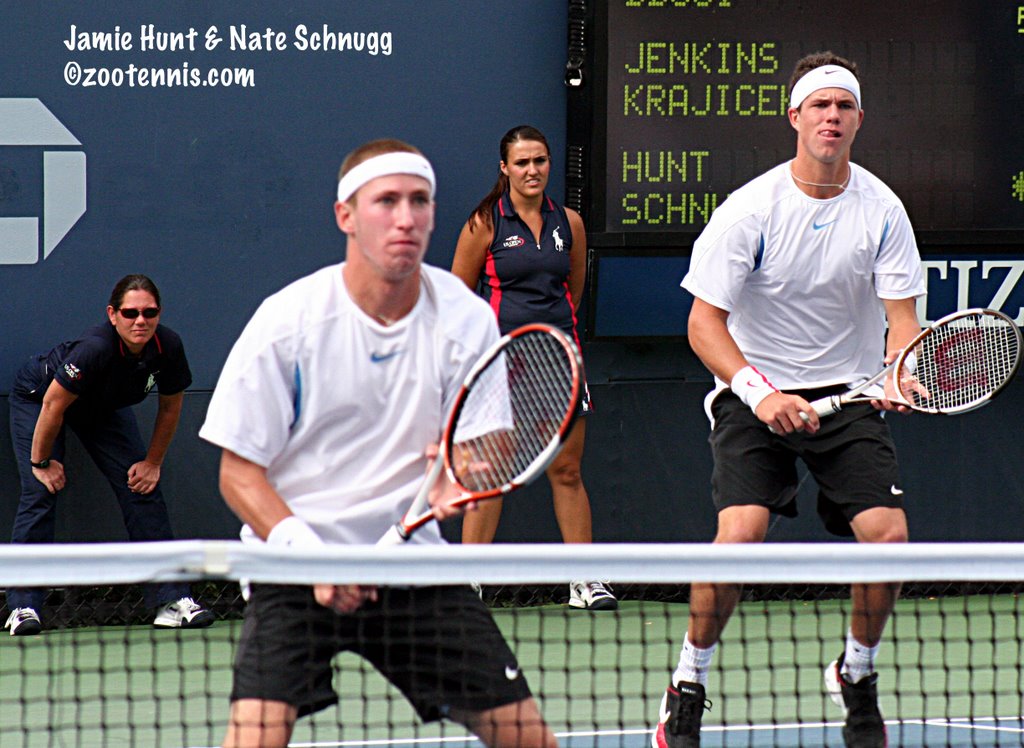
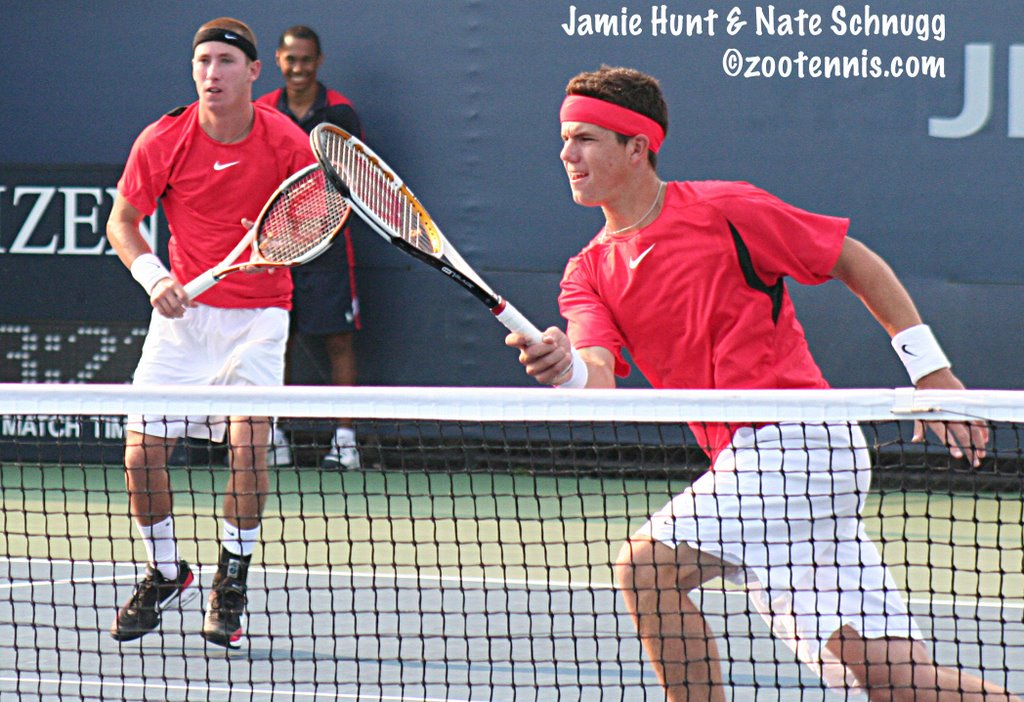
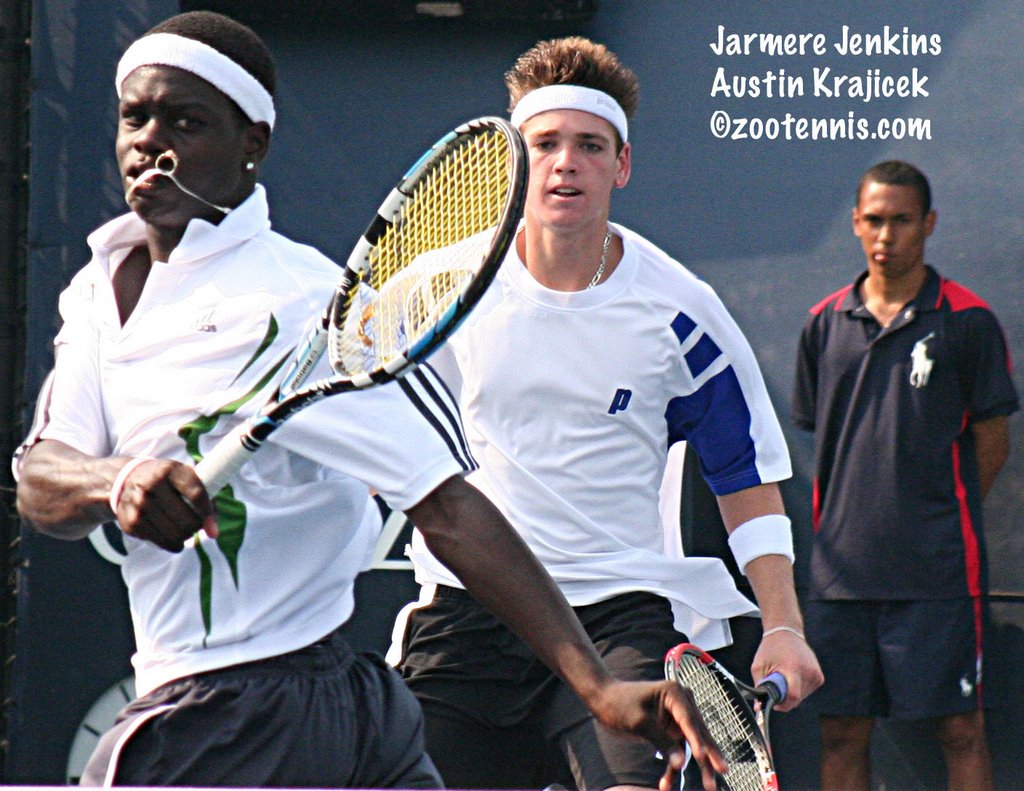
Jamie Hunt and Nate Schnugg won their first Grand Slam title as a team Sunday afternoon at the Billie Jean King National Tennis Center, defeating fellow Americans Jarmere Jenkins and Austin Krajicek 6-3, 6-3, in the first boys final to feature two teams from the U.S.

Although they were obviously happy to win, accepting congratulations from many family members as they posed for postmatch photographs, they spent most of the press conference singing the praises of their younger opponents.

"Jarmere was hitting some of the most unbelievable shots I've ever seen," said Schnugg who now has another Grand Slam junior doubles title to go with the Wimbledon crown he won with Kellen Damico in July. "I can't even imagine getting to the finals of the US Open when I was 15," Schnugg said, referring to Jenkins' age. "Even if I did, I don't think I would be able to hit a ball I'd be so nervous," Schnugg said. "I was still playing high school tennis when I was 15," Hunt chimed in.

There were no signs of nerves from Jenkins and Krajicek, as they took a 3-1 lead in the first set, and it looked as if their string of upsets might continue. As unseeded wild cards, they won their first three matches in third set tiebreaks and in the semifinal rolled past the eighth-seeded team 6-3, 7-5. But the unseeded Hunt and Schnugg reeled off six straight games before Krajicek held for 1-1 in the second.

"We kind of started rolling at 3-1," Schnugg said. "We got in a groove on our returns, and we didn't have any trouble on our serve games after that. They lost a little of their energy and they had a hard time getting it back."

"We didn't play our best," Krajicek, 16, said. "But you have to give Jamie and Nate credit for that. They played well, better serves, they had good returns when they needed it."

"But we'll be back next year, in the men's," Jenkins said half-joking or perhaps eyeing the wild card that goes to the 18s doubles champions in Kalamazoo.

Hunt has played his last junior event, and as a freshman at the University of Georgia already two weeks into his first semester, he will have little time to celebrate his first Grand Slam junior title. "I'm getting up at 6:30 to go running with the team tomorrow," the 18-year-old from San Antonio said.

Medford Oregon's Schnugg, who turns 18 next month, expects to play the Orange Bowl in December and enter Georgia in January. "It was so fun playing with Jamie," Schnugg said. "I've been living with him for three years at both academies I went to, and the next four years at Georgia, I can't wait to see what we do."

And as Bulldogs, they'll keep their eye on the junior ranks, and on Jenkins and Krajicek in particular. "Their potential is unlimited," Schnugg said. "I can't wait to see what they do."

And as they collected the aqua boxes that held their Tiffany crystal chalices, they reflected on their junior experiences.

"It's a little sad," Hunt said, "because I'm not going to be able to see some of these people that I've made friends with from all the different countries and I'm not going to get to play any more junior Grand Slams--that's disappointing. But I'm excited about my next four years at Georgia, although there's going to be some matches in Starkville Mississippi. It's a little different than playing in New York, Paris and London."

"This year has been kind of a dream for me," said Schnugg, who also reached the finals of the Australian Open Junior Championship in January with Damico. "I wouldn't trade it for anything in the world."

Hunt and Schnugg's win punctuates the dominance of U.S. boys teams in doubles, as the last three junior doubles championships at both Wimbledon and the U.S. Open were won by American teams.

Saturday, September 9, 2006

Jamie Hunt and Nate Schnugg Meet Jarmere Jenkins and Austin Krajicek in All-American Doubles Final; Pavlyuchenkova Aims for Doubles Grand Slam Sunday


©Colette Lewis 2006
Flushing Meadow--

No matter which team wins on Sunday, the United States will have its third consecutive U.S. Open Junior Doubles champions, when Jamie Hunt and Nate Schnugg face Jarmere Jenkins and Austin Krajicek in the first-ever All-American boys doubles final.

Unseeded, Hunt and Schnugg, who were finalists in the 18s in Kalamazoo last month, defeated the unseeded Italian team of Daniel Lopez and Matteo Trevisan 6-2, 6-4, 6-2, giving Schnugg his third trip to a Junior Grand Slam final this year. Playing with Kellen Damico, Schnugg reached the final in Australia and won Wimbledon; together they won the Grade A Banana Bowl and that experience showed Saturday afternoon.

"I didn't feel nervous this match," said Hunt. "We were just kind of swinging away," Schnugg said."We came out and played, played well and we took it."

Volleying with confidence, and returning particularly well on Trevisan's serve, Hunt and Schnugg never seemed anything but composed throughout the match, even when the Italians broke Hunt early in the second set and made it stand up. When Trevisan served for the first time in the third set at 15-30 Hunt dug a sure Lopez volley winner out and got it back over the net to prolong a point they eventually won, setting up two break points. When they converted on the second, the current (Hunt) and future (Schnugg) Georgia Bulldogs had the break they needed to set up a meeting with Jenkins and Krajicek.

"I'm glad they made it," said Schnugg of the finalists in 16s in Kalamazoo last month. "I'm really glad they made it." "We can't take them lightly," Hunt said. "They're playing some great tennis."


In their previous three victories, Jenkins and Krajicek had won in third set tiebreaks, but the unseeded pair were really clicking on Saturday afternoon, taking out the 8th seeded team of Ruben Bemelmans of Belgium and Jaak Poldma of Estonia 6-3, 7-5.

Jenkins and Krajicek, who were a wild card entry, quickly established their dominance, rolling to a 5-1 lead before closing out the first set. Trailing 5-3 in the second, they immediately got the break back and when Krajicek held for 5-5, Bemelmans was under the gun. When he was broken at love, Jenkins took his opportunity to serve it out and avoid the customary third set tiebreak ending.

"After we won the first one, Austin said 'let's try to win every match six in the third'" Jenkins said. "Then we had a couple more and we decided maybe that was too extreme, so we brought it today and made it a little bit shorter match," Krajicek said.

Asked about the possibility of playing the older American team (Krajicek is 16, Jenkins is 15), the younger boys were confident.

"Our coach (Mark Merklein) was telling us from the start that we could do it, so it was no surprise to us," said Jenkins. "We know when we play well we're just as good as anybody," Krajicek echoed. "We'll bring our game, do what we do, shake and bake, and we'll take you on."

In 2005 Donald Young and Alex Clayton won the US Open boys doubles title, and in 2004 Brendan Evans and Scott Oudsema claimed the championship.

In the girls doubles championships, Anastasia Pavlyuchenkova will try for her fourth junior Grand Slam doubles title on Sunday, when the young Russian and her partner, Canadian Sharon Fichman, the top seeds, meet the second seeded team of Mihaela Buzarnescu and Raluca Olaru of Romania in the girls doubles final.

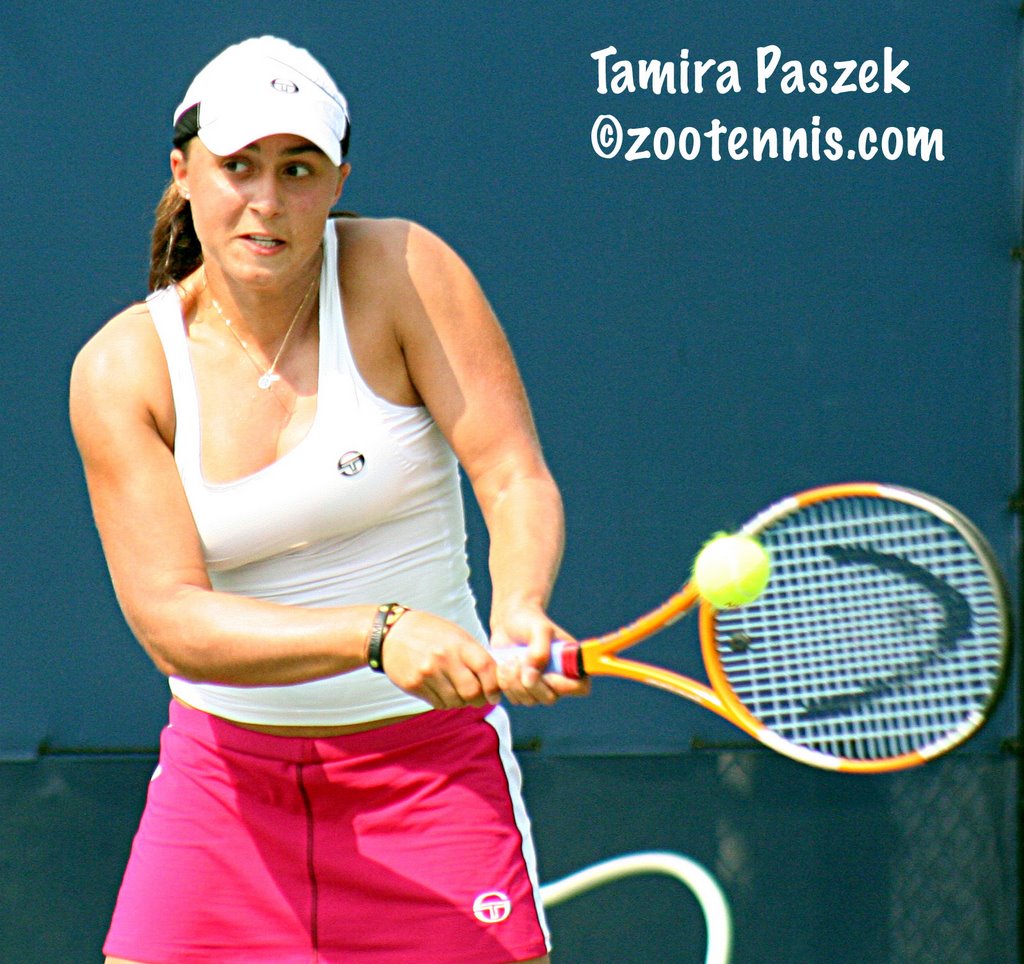
Fichman and Pavlyuchenkova won the Australian and the French, while at Wimbledon Pavlyuchenkova teamed with Alisa Kleybanova of Russia to capture that title. In Saturday's semifinals, Pavlyuchenkova and Fichman defeated the Czech team of Katerina Kramperova and Katerina Vankova 7-6 (3), 7-5. Buzarnescu and Olaru had an easy 6-1, 6-2 win over the unseeded Austrian team of Melanie Klaffner and Tamira Paszek.

Asked about the doubles Grand Slam, Pavlyuchenkova said, "I don't want to put pressure on me. It's the fourth Grand Slam so I don't want to put pressure on because it's difficult to play like this. If you think about this, you'll never do this."

Polansky Defeats Young, Meets Lojda in Final; Pavlyuchenkova Goes for Second Junior Slam Title Against Paszek


©Colette Lewis 2006
Flushing Meadows--

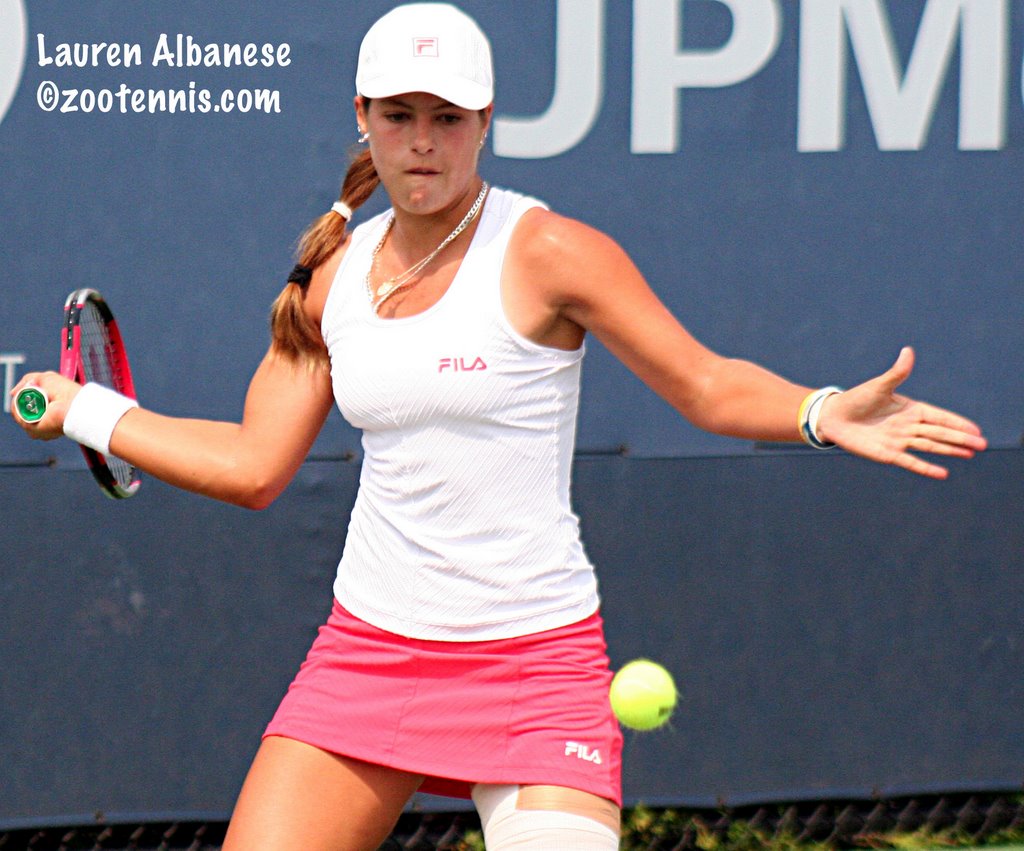
It's time for me to confess that I didn't see a single point of Lauren Albanese's 6-2, 6-2 semifinal loss to Tamira Paszek of Austria, because it was played at precisely the same time as the Donald Young and Peter Polansky match on courts separated by crowds and distance on a beautiful Super Saturday at the Billie Jean King National Tennis Center. I did see every point of the boys semifinal contest, however, a 6-3, 6-7 (2), 6-3 victory for the unseeded Canadian.

In the first set, Polansky started off quickly, as he had done all week, breaking Young in the fourth game, although actually Young broke himself with a double fault. The 17-year-old from Atlanta dropped his next service game too, and Polansky needed the cushion, when he was broken serving for the set at 5-1.

When Polansky pounced on Young in the first game of the second set, it looked as if the 18-year-old Canadian was headed for a straight set victory, but Young dug in, broke back for 1-1 and the battle lines were drawn for a tiebreak.

"It was a close second set," Polansky said, "and he played really well in the breaker. He barely missed a first serve."

With the match even, Polansky, whose only show of emotion is an occasional subdued "c'mon" after a winner, didn't waiver, continuing to hit with pace and depth while concentrating on holding serve.

"I knew he was a really good returner," Polansky said, "so I tried to put as many first serves in as possible to put him off the court."

Dean Coburn, Polansky's coach, identified the match's turning point.

"I think he played very aggressive, while still keeping the errors down. He stepped up his serve in the third set, got the early break and made Young lose some focus."

It was the fourth game that Young lost, and when Polansky held for 4-1, he began to see the finish line.
"He started to sit back and hit more loopy shots, more spinny shots, just rally a bit, so every short ball I had, I tried to put him trouble, force a few more errors."

It wasn't just errors from Young that produced points for Polansky. He hit both forehand and backhand winners against the lefthander, which, as Young previous opponents would testify, is difficult to do. With speed, court positioning and an instinct for the next shot, Young can win points that should be over, but Polansky's depth and placement were too much for him, and chasing shot after shot eventually wore him down.

"I was running around a lot and hitting a lot of forehands, putting him on the run," Polansky said. "I was just going after it and a lot of them were going in."

Polansky now faces Czech Dusan Lojda, who has played only one other Junior Grand Slam this year--the Australian, where he lost in the round of 16. The 18-year-old lefthander has instead been competing in Futures events, earning enough points for an ATP ranking of 598, for which he received a seeding of 10 for the US Open Juniors.

Lojda defeated his good friend Luka Belic, the ninth seed, 6-3, 6-4 in a match that had widely varying levels of play.

"I play against him for the first time, and it was a very nervous start," said Lojda. "But then I break his serve and it was a little bit easier. But it wasn't like 6-3, 6-4, it was much tougher."

Lojda and Polansky have never played, but Lojda watched the Canadian take out the Czech Republic's no. 2 player Roman Jebavy on Friday and he was impressed.

"He's playing good and I am playing also good, it's the U.S. Open final, so we will see."

Tamira Paszek is playing in her third U.S. Open Junior Championship at the age of 15, and is no stranger to Junior Grand Slam finals, as she was runnerup at Wimbledon in 2005. But in Albanese, she had an opponent who had recently beaten her, at the Luxilon Cup, a junior exhibition held in conjunction with the NASDAQ (now Sony Ericsson) Pro event in Key Biscayne.

"I was a little nervous in the beginning because I played her in April and I lost to her in two sets, so I knew she was a great player, but then I got my rhythm and I played really, really well," said Paszek, who trained at home in Austria prior to coming to New York. "We had some great ball exchanges, some great rallies."

So did top seed Anastasia Pavlyuchenkova and unseeded Katerina Vankova of the Czech Republic--at least in the first set--until Pavlyuchenkova pulled away for a 7-6 (4), 6-0 victory, and her third final in a Junior Grand Slam this year.

"I think it was a pretty tough match. I know her a little bit, I played against her once, and she's lefty, so it's good for her and uncomfortable for me," said the 15-year-old from Samara, Russia, who won the Australian Open Junior Championship in January.

"She concentrated on the first set really well. She got every ball into the court, and it was pretty difficult for me. I was down in the first set, and when I came back, I think I just broke her mentally."

The Paszek Pavlyuchenkova final will be a rematch of their quarterfinal meeting in Roland Garros this year, won by the 15-year-old Russian 6-4 in the third set. And with one title already and the no. 1 ITF ranking, it's no suprise that she's confident.

"Actually I expected the final," she said, pausing to amend that. "I expected good results. I just wanted to show my good game."

Friday, September 8, 2006

U.S. National Champions Advance to Singles Semifinals; Hunt-Schnugg and Jenkins-Krajicek Earn Doubles Semifinal Spots


©Colette Lewis 2006
Flushing Meadows--

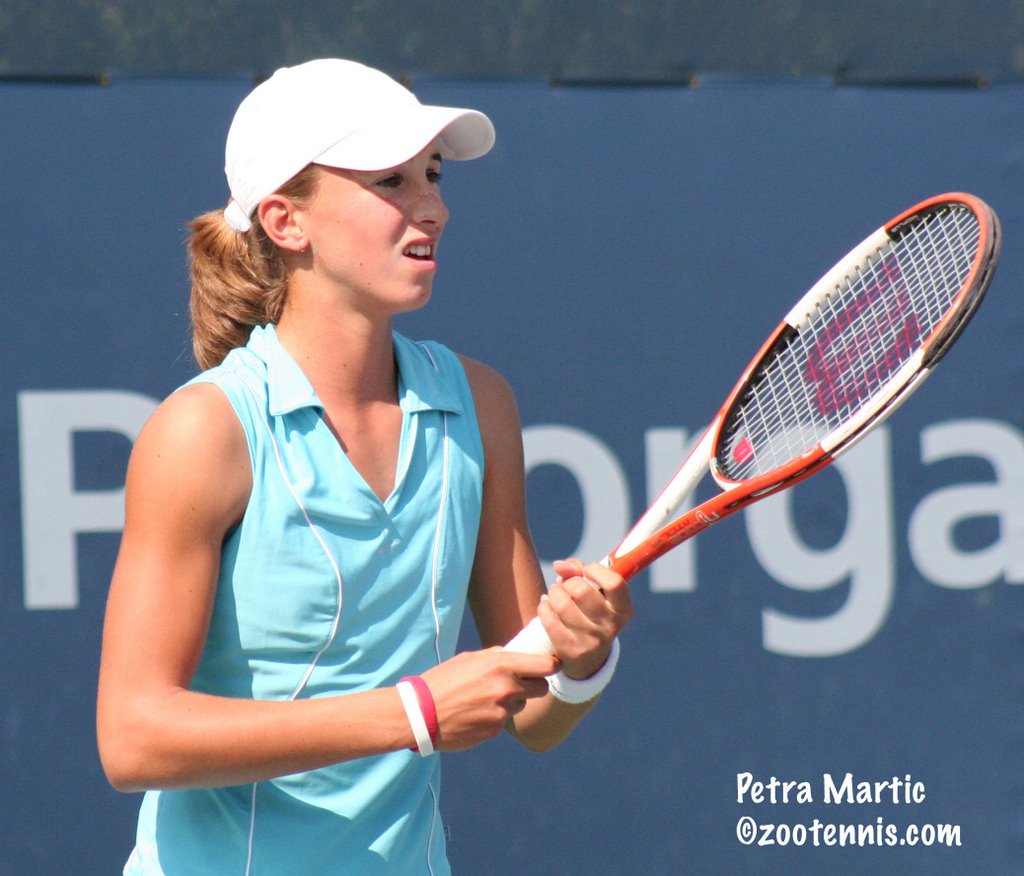
USTA girls 18s champion Lauren Albanese and two-time boys 18s winner Donald Young are putting the experience gained in the main draw of the US Open last week to good use in this week's junior championships. Albanese defeated unseeded Petra Martic of Croatia 6-4, 6-4 in their quarterfinal match Thursday afternoon, while Young, the fourth seed, defeated 11th seed Pavel Chekhov of Russia 7-6 (1), 6-3.

Partly cloudy skies and temperatures reaching the low 80s produced ideal playing conditions at the Billie Jean King National Tennis Center Friday, with only an occasional swirling breeze giving the players any concern.

Young drew a large crowd for his 11 a.m. match on Court 11, with many fans stopping by prior to the start of the women's semifinals to get a glimpse of the well-known teenage prodigy. Young didn't disappoint, showing his soft hands on his frequent trips to the net as well as his ability to blunt the power of Chekhov's serve and forehand.

"I had to come in to beat him," Young said. "If I didn't come in, he would have got me, would have won those points." The 17-year-old from Atlanta didn't lose his serve in the match, didn't face a break point until the first game of the second set, and made his one break of Chekhov's serve at the most opportune time--3-4 in the second. "I got a little nervous (at break point)," Young said. "My backhand hit the net and barely went over. It was actually a better shot than normal, because it made him come forward and chip it." Chekhov was thrown off when Young's shot clipped the tape and netted the reply, giving Young a chance to consider his loss in the US Open Junior last year as he stepped to the line to serve it out.

"Last year in the quarterfinals I was serving for the match at 6-5, 30-15, and I got really tight," Young said. "I lost that game and continued to lose the match (in a third set tiebreak), and I was determined not to let that happen this time."

Young's semifinal opponent will be unseeded Peter Polansky of Canada, a 7-6 (9), 6-1 winner over 12th seed Roman Jebavy of the Czech Republic. Polansky couldn't hold an early break but played a determined tiebreak. Down two set points at 6-4, Polansky hit two winners to tie it, then garnered a set point of his own, but Jebavy denied him there and two more times before a doublefault at 9-9 sealed his fate. It was then that Jebavy began to unravel. Although he angrily smashed his racquet to the court after the first set was over, twice, he did not receive a code violation, much to the visible dismay of Polansky's coach. But Polansky wasn't distracted by the display of temper.
"It kind of made me happy," said Polansky, 18. "I knew he was getting mad, and he's either going to start going for his shots more and missing them or go into the semi-tank mode. He kind of stayed with it, but he wasn't the same as in the first set."

When he was broken in the first game of the second set, Jebavy bounced a ball out of the stadium and was given a point penalty for ball abuse, and Polansky could relax and play his game, surrendering the sole game when serving for the match at 5-0.

The other boys' semifinal will see Dusan Lojda of the Czech Republic against Croatia's Luka Belic. Tenth seeded Lojda quickly eliminated qualifier Artem Smirnov of the Ukraine 6-2, 6-2, while Belic took down the No. 2 seed, Jonathan Eysseric of France 6-4, 6-4. Belic, the ninth seed, avenged his 2006 Italian Open semifinal loss to Eysseric, and even their friendship didn't keep him from celebrating the win by falling to the court and bellowing with joy.

"Tennis is tennis," said the 17-year-old right-hander. "On the court he is not a good friend." Belic admitted he was nervous after breaking Eysseric at 4-4 in the second set, when at ad out, the Croatian somehow retrieved a sure winner from six feet behind the baseline and put the dipping forehand at the feet of the startled Frenchman. In the final game, Belic surprised Eysseric, serving and volleying to get to match point, but it looked as if Eysseric would pull it to deuce when Belic's effort in retrieving produced a shot weakly hanging in the air. "I was shaking on match point," Belic admitted, but it was Eysseric that blinked, catching the tape with his easy overhead smash.


On the girls side, Albanese string of impressive wins continues, and against Martic, Albanese was firmly in control from the outset.

"I didn't know who she was," Albanese said of the 15-year-old from Split. "I played exactly the way I needed to. I didn't go for too much, but at the right times I did go for my shots."

Albanese, who turns 17 next month, broke Martic in the first game of the match, and served well enough to make it stand up. In the second set Albanese also took a 2-0 lead, but this time the slim Croatian broke back, the only service game the Floridian lost. Trailing 3-2 on serve, Albanese stepped up the pressure and got the break she needed in the seventh game and squealed with delight when she served it out to reach her first Grand Slam semifinal.

"I expected to do well here," said Albanese of the US Open junior championships, "and there is kind of a pressure to do well since I won a match last week (in the women's main draw). But I think it's really good that I've shown that I am still able to win on the juniors."

Her opponent on Saturday is 11th seed Tamira Paszek of Austria, who rolled over Sacha Jones of New Zealand 6-1, 6-2. The other semifinal will find top seed Anastasia Pavlyuchenkova of Russia facing unseeded Katerina Vankova of the Czech Republic. Both struggled Friday, but advanced. Pavlyuchenkova defeated 10th seed Raluca Olaru of Romanian in a 7-5, 3-6, 6-3 contest that took over two and a half hours to complete. Vankova upset 13th seed Sharon Fichman of Canada 6-4, 1-6, 6-3.

Four U.S. doubles teams played quarterfinal matches late into the evening on Friday, with two boys teams advancing, while both girls teams were eliminated. Jamie Hunt and Nate Schnugg came from behind to take a 2-6, 7-6 (4), 6-4 victory over second seeds Chekhov and Petru-Alexandru Luncanu of Romania, winning the final four games of the match.


Jarmere Jenkins and Austin Krajicek used their familiar third-set tiebreak strategy to eliminate Roberto Maytin of Venezuela and Rupesh Roy of India, also unseeded, 6-7 (6), 6-4, 7-6 (5). It was the third consecutive match they've won by that barest of margins. They are in the upper half of the draw, so an All-American doubles final is a possibility.

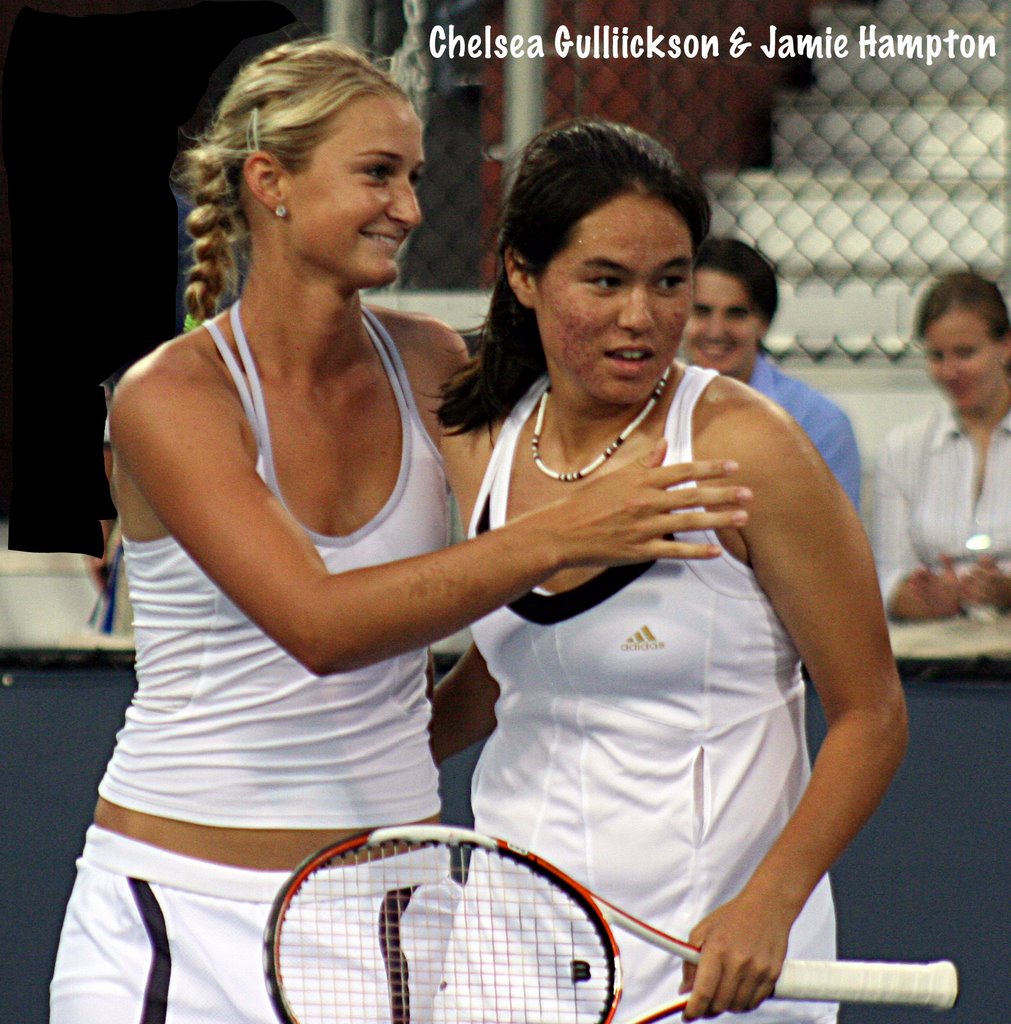
In girls doubles play, Chelsey Gullickson and Jamie Hampton lost to the top-seeded team of Fichman and Pavlyuchenkova 6-3, 1-6, 6-1, while Kristy Frilling and Ashley Weinhold were beaten by the second seeded Romanian team of Mihaela Buzarnescu and Olaru 6-4, 6-1. Lena Litvak of the U.S. and her partner Sacha Jones, also were eliminated in the quarterfinals on Friday.

For complete draws, see usopen.org. For more photos, visit ustaboys.com.

Thursday, September 7, 2006

Albanese, Young Represent U.S. in Quarterfinals; Martic Takes Out Third Seed in Girls Action Thursday


©Colette Lewis 2006
Flushing Meadows--
Unseeded Lauren Albanese and fourth seed Donald Young earned spots in the quarterfinals with straight set victories Thursday at the Billie Jean King National Tennis Center.

Albanese trailed another unseeded American, Madison Brengle, early, but quickly earned back the early break she suffered and rolled from there, 6-4, 6-1. Her opponent in the quarterfinals, unseeded Petra Martic of Croatia, created the biggest stir of the day with her straight set win over the third seed, Ayumi Morita of Japan. The 15-year-old is playing in her first junior Grand Slam, but it was Morita that crumbled under pressure. Serving at 5-6, break point, Morita doublefaulted and never recovered, losing 7-5, 6-0,

"I watched her last match," Martic said, "and I knew if I played good, I could win the match. Second set I got relaxed, I knew she would be less with her play. I played good, she was very nervous, making lots of mistakes."

Sixth seed Julia Cohen of Miami was upset by 10th seed Raluca Olaru of Romania 7-6(3), 4-6, 6-3. Holding serve was the exception for both girls, but Olaru was broken only once in the final set to claim the win. Olaru faces the top seed Anastasia Pavlyuchenkova on Friday. The no. 1 ranked Russian rolled over unseeded qualifier Jade Curtis of Great Britain 6-2, 6-2.

Canadian Sharon Fichman, seeded 13th, blew past fourth seed Mihaela Buzarnescu of Romania 6-0, 6-1 to earn a quarterfinal contest with unseeded Czech Katerina Vankova, a 6-3, 6-3 winner over Ksenia Pervak of Russia.

The day's most riveting match saw New Zealand's Sacha Jones save two match points in her 2-6, 6-2, 7-5 win over wild card Ashley Weinhold of the U.S.
Weinhold played near-perfect tennis in the first set, while Jones struggled with her serve.

"She was playing real well in the beginning," Jones said. "Her slice is very effective, but my former coach, Chris Lewis, was a finalist at Wimbledon and he had the best slice I've ever played against, so I knew how to handle it."

At the first changeover of the third set, Weinhold took a medical timeout and emerged with her left thigh taped, and she moved well enough to take a 5-4 lead, but at 40-30, Jones hit a screaming forehand winner to save that match point, the second match point Weinhold missed wide with a forehand.

Jones was determined stay aggressive when she got her chance two games later.

"Last week I was up on Julia Cohen a set and 5-4 40-0," Jones said of their quarterfinal contest in the Canadian Open "and I didn't go for it and I ended up losing in the third in like a three-hour forty-five minute match, so I learnt my lesson there. I had no choice, I had to go for it."

Jones will play 11th seed Tamira Paszek of Austria, who eliminated 8th seed Sorana Cirstea of Romania 6-2, 6-4.

In boys singles, Young gave an impressive performance, blunting the power of Australian Greg Jones to earn a 6-3, 6-4 win. Jones had played flawlessly in his win Wednesday over Michael McClune, but his volleys were not as sharp against Young. The 17-year-old from Atlanta made Jones hit that extra shot often, resulting in errors when he tried for too much. But although Jones was behind the entire match, the Sydney native never went away, battling back from 1-3 0-40 on his serve to pull even at 3 before giving up his next service game on another volley error. Jones saved a match point at 3-5, and earned a break point at 5-4, but Young extricated himself and clipped the line with a forehand winner to close out his third round victory. Young will meet Russian Pavel Chekhov in Friday's quarterfinals. Chekhov, the 11th seed, defeated Young at the Italian Junior Open last year.

Unseeded Peter Polansky of Canada continued his outstanding play, defeating 2006 Wimbledon finalist Marcin Gawron of Poland 6-0, 5-7, 6-1.

"I kind of lost my intensity a bit in the second," admitted the 18-year-old from Thornhill, outside Toronto. "I decided to put everything in and make him play (in the third). I got a couple of breaks and broke his spirit a bit."

Polansky's opponent on Friday is 12th seed Roman Jebavy of the Czech Republic, whom he has never played. The Czech Republic is the only country with two boys remaining in the final eight, with 10th seed Dusan Lojda also winning on Thursday. He plays qualifier Artem Smirnov of the Ukraine, who continued his stellar week with a 6-3, 2-6, 6-2 upset of third seed Nicolas Santos of Brazil. In the fourth match, Croatia's Luka Belic, the ninth seed takes on second seed Jonathan Eysseric of France.

The doubles quarterfinals are set as well, and there are two all-U.S. teams alive in both girls and boys divisions. Despite her thigh injury, Weinhold and partner Kristy Frilling advanced easily and Chelsey Gullickson and Jamie Hampton moved through in straight sets as well. Lena Litvak, partnering Jones, upended the third seeds, Cohen and Corinna Dentoni of Italy 7-5, 6-2.

The unseeded team of Jamie Hunt and Nate Schnugg took their second three-set win, 7-6(4), 4-6, 6-4 over seventh seeds Michal Konecny and Andrej Martin. Jarmere Jenkins and Austin Krajicek, also unseeded, won their second consecutive third set tiebreak, overtaking Jones and Hans Podlipnik of Chile 4-6, 7-5, 7-6(4).

For complete draws, see usopen.org. For more photos, visit ustaboys.com.